Short answer:large format tiles, usually 600 x 600 mm and up, can make a floor or wall look seamless, but only if what sits under them is flat. The bigger the tile, the more it shows any dip or hump in the floor. That's why the work that matters most happens before the first tile goes down: checking the substrate, screeding and levelling, then back-buttering each tile and laying it with no lippage between edges.
We lay large format tiles on bathroom, kitchen, laundry and living area floors and on feature walls across Adelaide's southern suburbs from our base in Woodcroft. Here's what's involved, where they work best and the questions worth asking before you choose them.
Why large format tiles are popular
- Fewer grout lines. Less grout to clean, which is one reason they suit busy kitchens and coastal homes.
- A calmer look. A large tile run through a kitchen and living area makes the space read as one room.
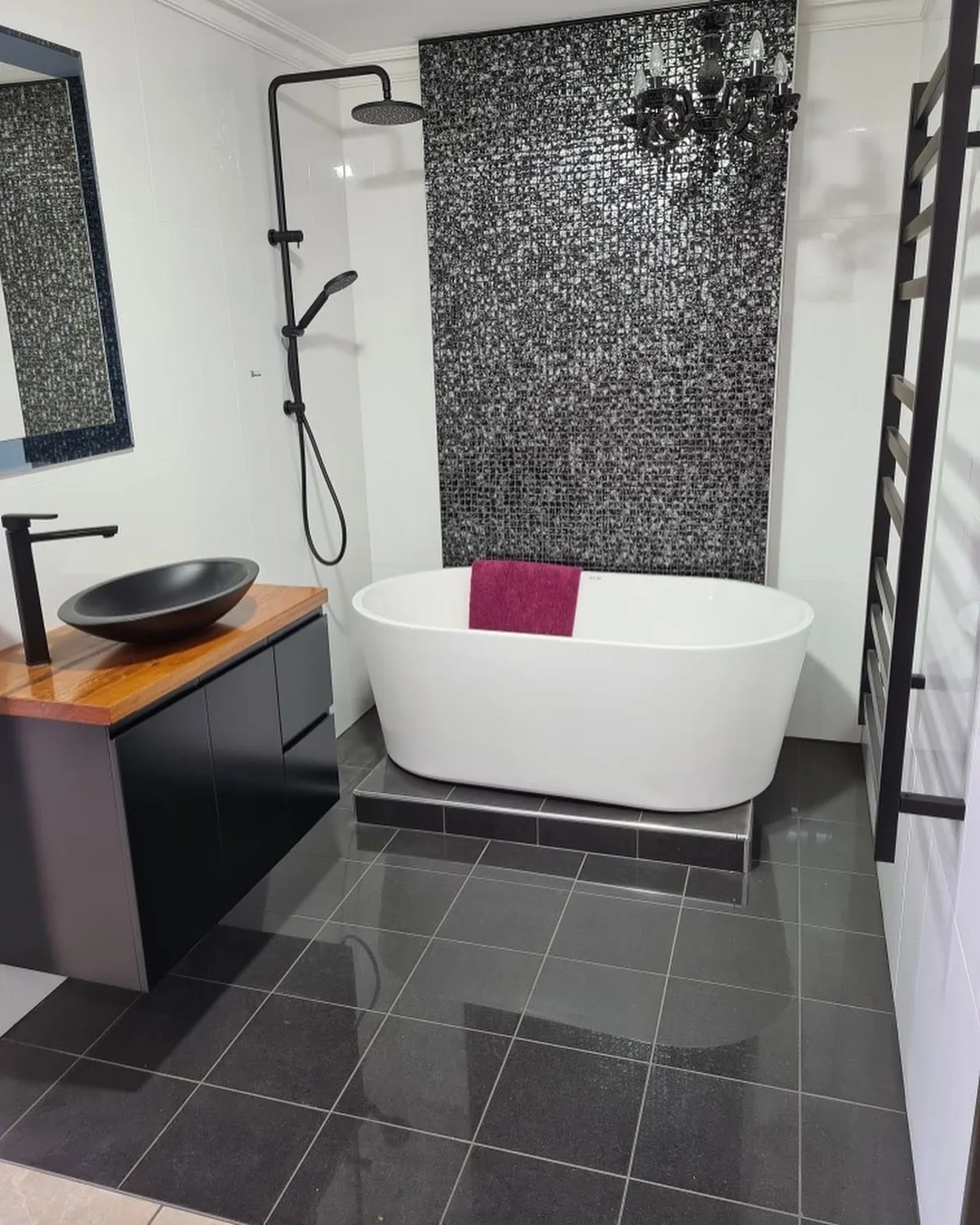
- Feature walls. Floor-to-ceiling large format walls behind a bath or vanity give a clean backdrop with very few joins.
The part you don't see: a flat base
A small tile can follow a slightly uneven floor and nobody notices. A large rigid tile can't. If the floor dips, the tile either rocks, leaves a hollow underneath or sits higher than its neighbour. So before tiling we check the slab or floor, and where it's out of level we screed and level it first. Our screeding and floor levelling work is the step that stops tiles cracking, drumming or lifting later.
Older homes need more of this. Slabs that have moved over the decades and settled timber floors are common in suburbs like Port Noarlunga and Glenelg, and in split-level homes around Flagstaff Hill. Timber floors are assessed for movement and sheeted where needed before any tile goes down. We include that preparation in the quote rather than skipping it.
Laying them: back-buttering and lippage
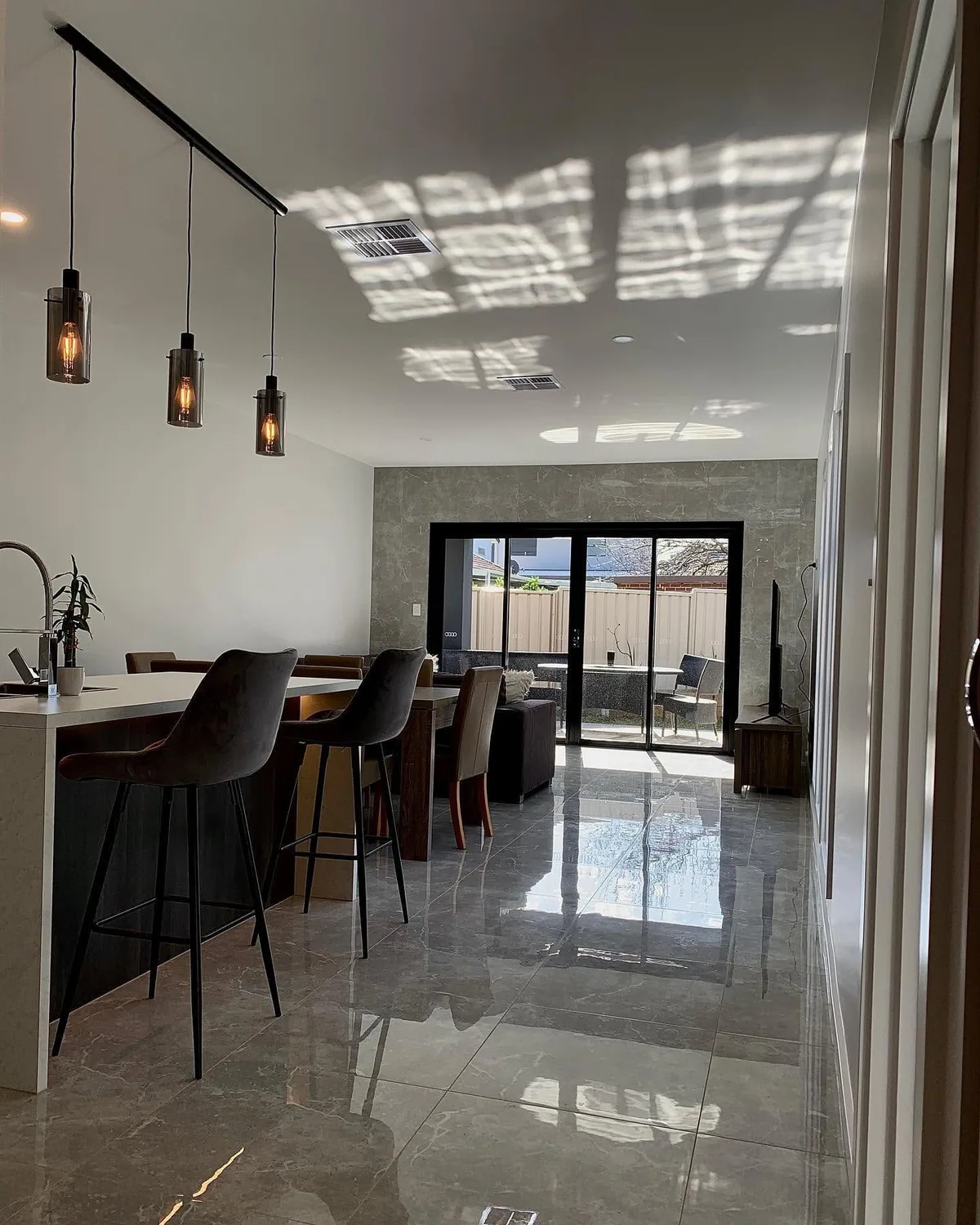
Each large tile is back-buttered, meaning adhesive goes on the back of the tile as well as the floor, so it's fully supported with no hollow spots. Then the tiles are levelled against each other as they go down. "Lippage" is the small step where one tile edge sits higher than the next. On a large format floor, especially one with light coming across it from a window or sliding door, even a small step catches the eye and the shadow. Our aim is a flat, lippage-free finish with consistent grout lines.
Set-out matters too. With fewer, bigger tiles, every cut is more visible, so we plan where the full tiles land and where the cuts go (doorways, the edge of the island, the line of the shower) before we start.
Large format tiles in a shower
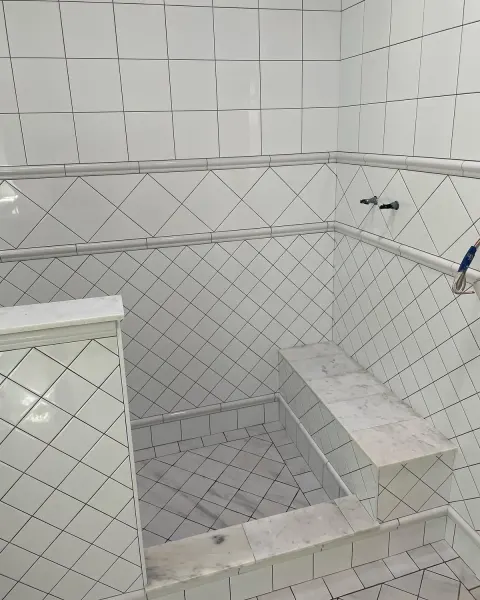
They can work, with the right floor design. Where a floor waste is installed, the NCC Housing Provisionsrequire the shower floor to fall continuously to it at between 1:80 and 1:50. A centre waste means the floor falls in several directions, which large rigid tiles can't follow without cuts. A linear drain lets the floor fall one way, and that's the usual way to carry a larger tile into the shower. Our guide to bathroom floor tiles covers slip ratings and tile size in wet areas, and the waterproofing guide explains what sits underneath.
Large format tiles on walls
Walls need to be flat too, and big tiles leave less room to hide a crooked wall. Power points, switches, tapware and niches all land inside a tile rather than near a joint, so we set them out first. On a kitchen splashback, large format tiles give very few grout lines, but they need careful planning around the power points.
Does it take longer?
Usually a little. Large format tiles take longer to set out than a simple stack, and any screeding or levelling has to be done and set before tiling starts. Our bathroom renovation timeline shows where that fits in a full job.
Large format tiling in southern Adelaide
We laid a large format kitchen floor in Morphett Vale, level with seamless grout lines, and large format feature walls are a regular part of our bathroom renovations. See our large format tile service, browse the project gallery, or ask for a free quoteand we'll look at your floor before we price it.