Pick a bathroom floor tile in three steps: a slip rating that suits a floor that gets wet, a size that works with the falls to your floor waste, and a grout that suits a wet area. Beaumont Tiles' guidance puts a bathroom floor at a slip rating of P2 to P3. The National Construction Code doesn't set a slip rating for a house bathroom floor at all, so the choice is yours, which is exactly why it's worth getting right in the tile shop.
What the P-ratings mean
Tiles sold in Australia are classified under AS 4586 using tests such as the wet pendulum test, which gives a P rating. Standards Australia's HB 198 handbook explains how to specify them. Higher numbers mean lower slip risk. This table is from Beaumont Tiles' slip resistance guide:
| Pendulum class | Skid resistance value | Slip risk |
|---|---|---|
| P0 | Below 12 | Very high |
| P1 | 12 to 24 | Very high |
| P2 | 25 to 34 | High |
| P3 | 35 to 44 | Moderate |
| P4 | 45 to 54 | Low |
| P5 | Over 54 | Very low |
Beaumont's guide to choosing bathroom tiles suggests a bathroom floor needs a slip resistance between P2 and P3 and a wear rating between 2 and 5. For the shower floor itself, which is wet and soapy every day, the top of that range makes sense. Always check the rating on the actual tile you're buying, not the range it belongs to, and ask the supplier for the test result if it isn't on the label.
Is there a legal slip rating for a bathroom floor?
Not in a house. The NCC Housing Provisions (11.2.4) set slip-resistance classifications, tested to AS 4586, for stair treads, ramps and landings. They don't set one for a bathroom floor in a home. Commercial and public buildings are a different conversation, which is worth knowing if you're fitting out a commercial bathroom.
Matt, textured or gloss?
A polished or high-gloss tile on a bathroom floor is asking for trouble once it's wet. Matt and lightly textured finishes hold better underfoot. The trade-off is that a textured surface can take a little more cleaning, so it's worth feeling a sample rather than going off the photo.
Tile size and the shower floor
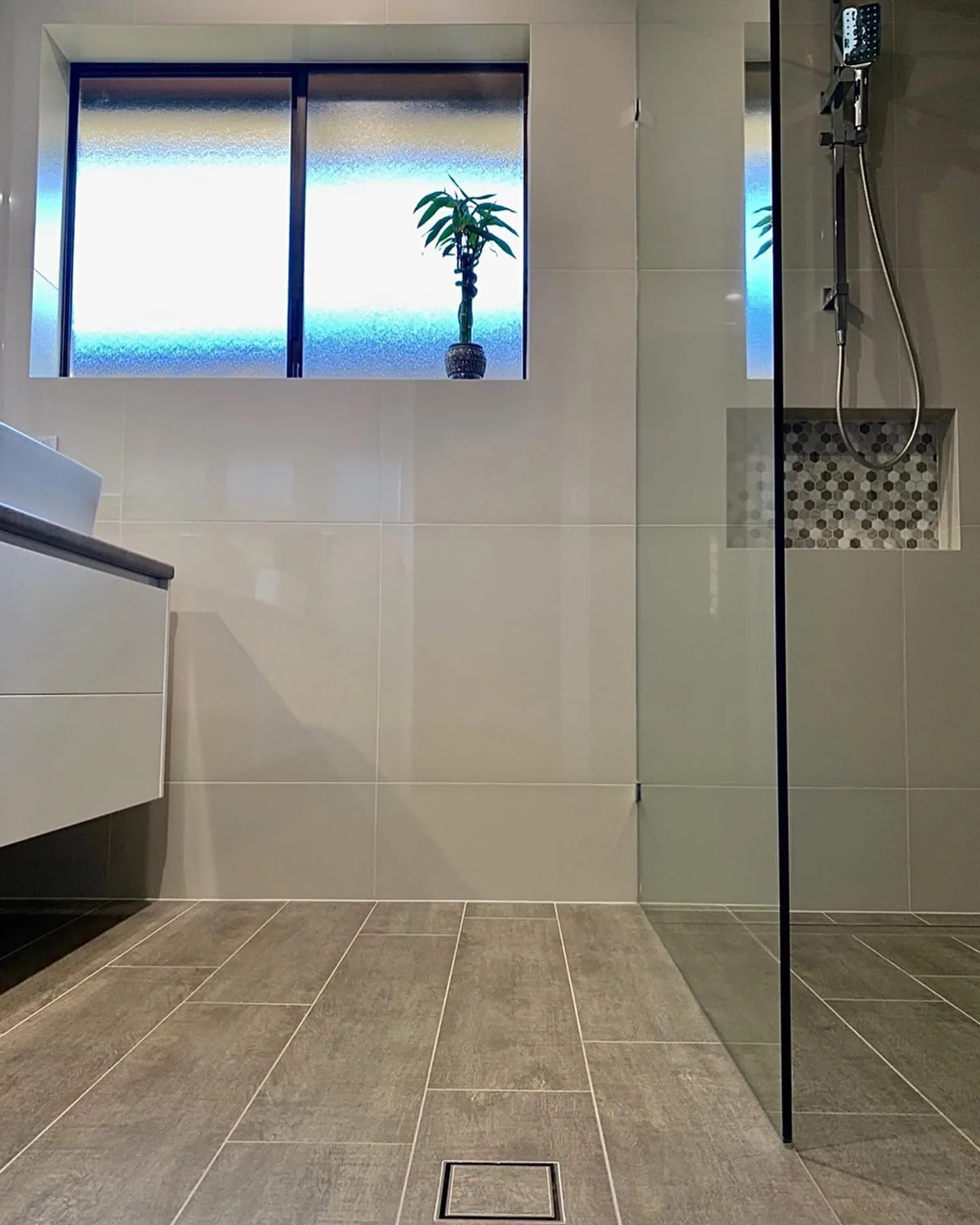
Where there's a floor waste, the Housing Provisions require the floor to fall to it at between 1:80 and 1:50 (Part 10.2). A traditional centre waste means the floor falls in several directions, which a large, rigid tile can't follow without cuts. That's why showers often use smaller tiles or mosaics on the floor, or a linear drain that lets the whole floor fall one way so a bigger format can be used.
Large format tiles (600 x 600 mm and up) look great on the main bathroom floor, but they demand a very flat substrate. We do the screeding and levelling first, then install them with a zero-lippage finish as part of our large format tile service.
Grout choices
- Cement-based grout is the standard choice. It's easy to work and repair, but it's porous, so it benefits from sealing and will stain over time in a shower.
- Epoxy grout is far less porous and resists staining, which suits showers and busy family bathrooms. It's harder to install and costs more.
- Colour. Mid greys hide everyday marks better than bright white on a floor.
- Corners and junctions get flexible sealant, not grout, because they move.
A checklist to take to the tile shop
- The slip rating (P class) and wear rating of the exact tile.
- Whether it's rectified (straight cut edges for tighter grout joints).
- Tile size for the main floor, and a separate tile or drain plan for the shower.
- Enough spare tiles for cuts and future repairs.
- Your grout type and colour.
We lay bathroom, laundry and kitchen floor tiles across the southern suburbs, including Seaford and Morphett Vale. Bring your shortlist to the quote and we'll talk through what works on your floor.