When a shower leaks, the tiles themselves are rarely the problem. Water usually gets through in one of two places: the grout and silicone joints on the surface, or the waterproofing membrane underneath the tiles. A regrout and reseal fixes the first one. It won't fix the second, and grouting over a failed membrane only hides the leak for a while. The trick is working out which one you're dealing with before you spend money.
Signs your shower is leaking
Some of these show up inside the shower. The more serious ones show up next to it.
- Grout that is dark, crumbly, cracked or missing, especially in the floor corners and around the floor waste.
- Silicone that has split, gone black or pulled away where the walls meet the floor, around the screen or at the tap and rose penetrations.
- Tiles that sound hollow (drummy) when you tap them, or tiles that have cracked or come loose.
- Bubbling paint, water stains or swollen skirting boards and door frames on the outside of the shower wall.
- Damp carpet, lifting floorboards or stained grout in the room next door. This is the classic “shower leaking into wall” pattern.
- A musty smell, or mould in the bathroom that comes straight back no matter how often you clean it.
- White, powdery deposits (efflorescence) coming through the grout lines.
What actually causes a shower to leak
Worn grout and silicone
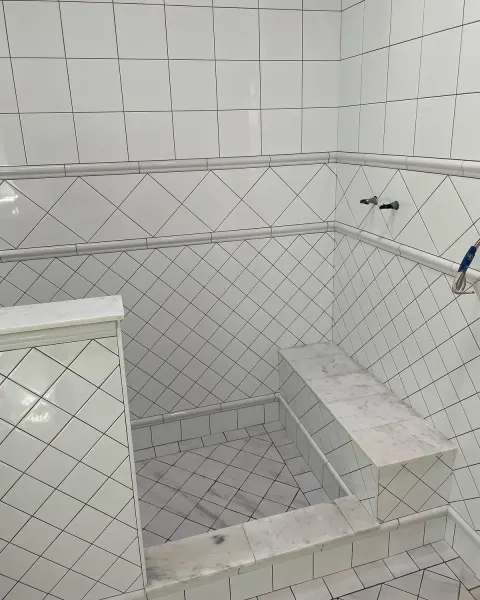
Cement-based grout is porous. Over years of hot water, cleaning products and movement, it cracks and lets water sit behind the tiles. The internal corners and the junction between the wall and floor move slightly as the house moves, so those joints need a flexible sealant rather than solid grout. When they are grouted solid, or the silicone has perished, they crack and water gets in.
A failed or incomplete membrane
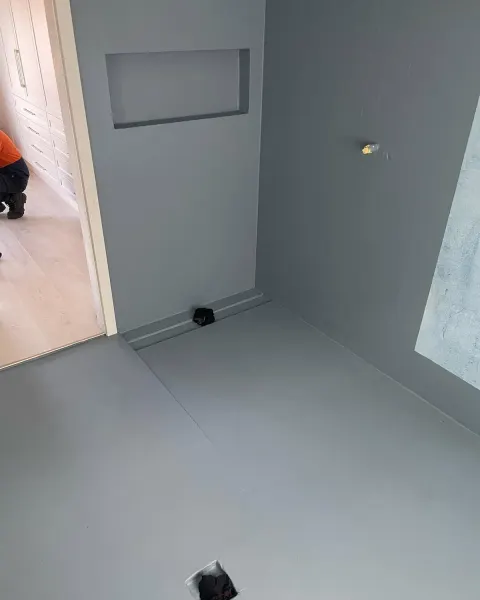
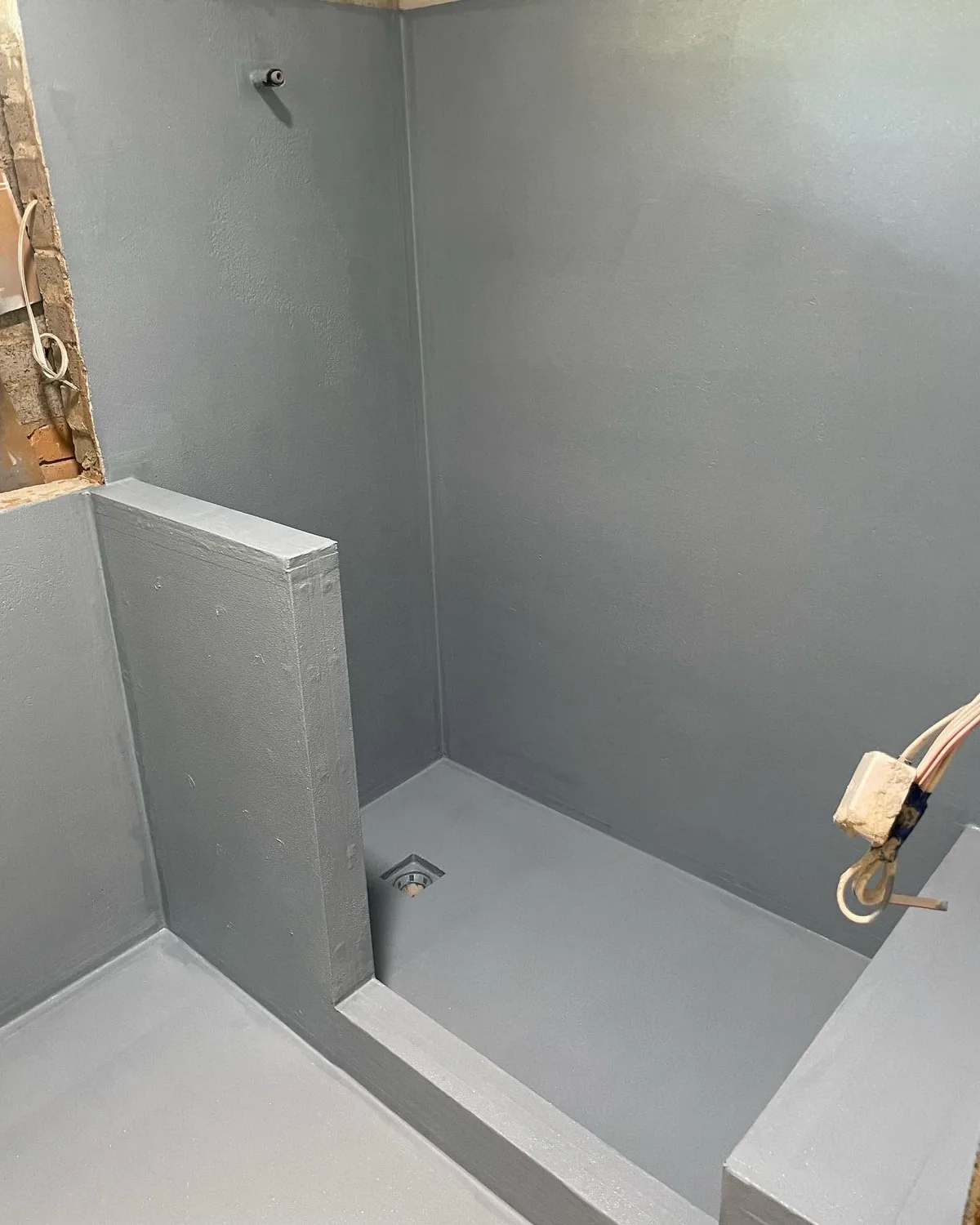
The membrane is the real waterproofing. Under the NCC Housing Provisions (Part 10.2), the floor of a shower area must be waterproof, the walls must be waterproof to at least 1800 mm above the floor substrate, wall junctions must be waterproof for at least 40 mm either side, and the wall/floor junctions and penetrations (taps, shower arm) must be waterproof too. Leaks happen when a membrane was never taken high enough, was missed at a corner or penetration, was tiled before it cured, or has simply aged and cracked. Older showers sometimes have very little membrane at all.
Poor falls to the floor waste
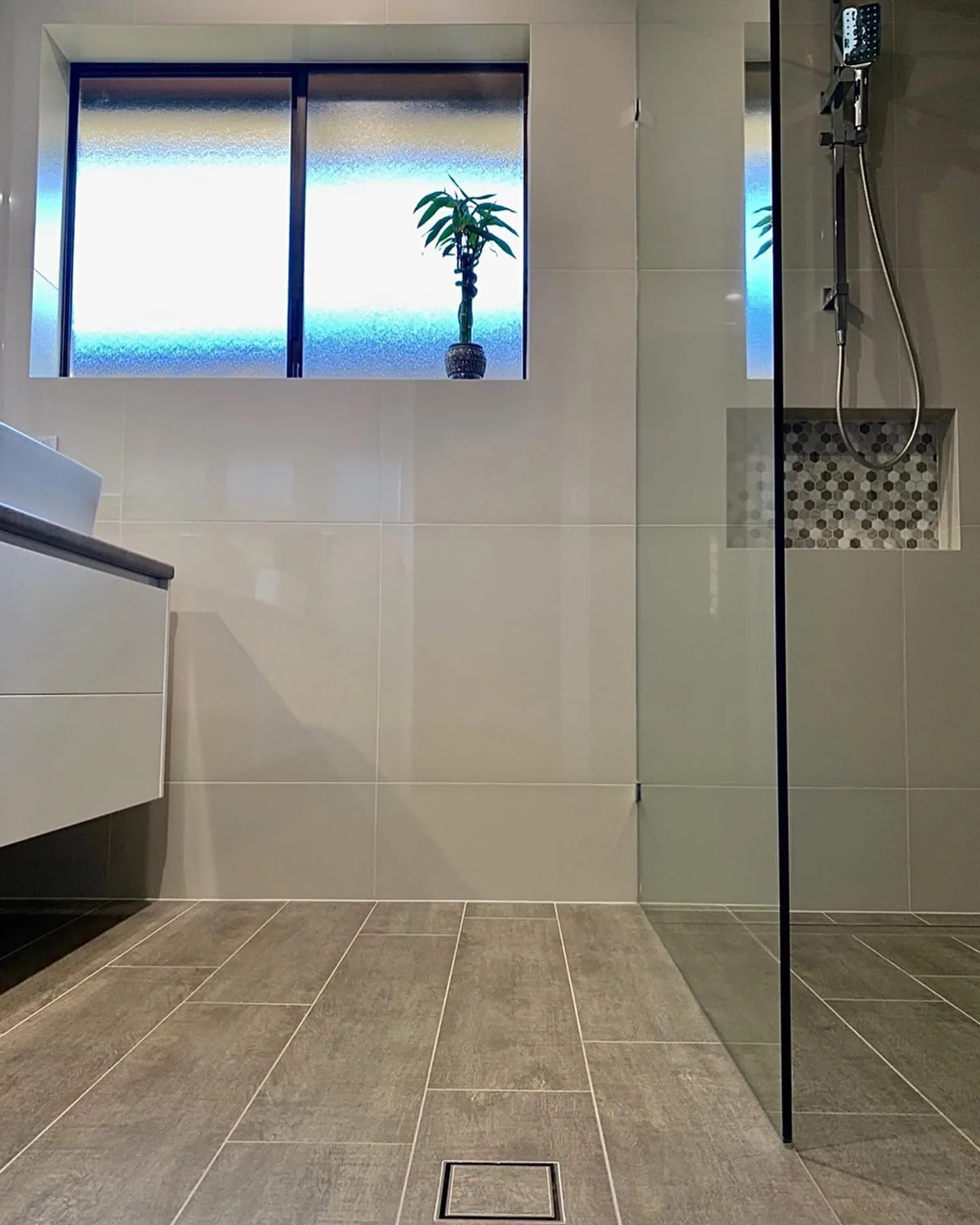
If water ponds on the shower floor instead of running away, it sits on the grout all day. Where a floor waste is installed, the Housing Provisions require a continuous fall to it of between 1:80 and 1:50. A floor that was screeded flat, or has settled, will hold water against the joints.
Plumbing, not waterproofing
A leaking tap body or pipe joint inside the wall can look exactly like a shower leak. If you see damp when nobody has used the shower, or your water bill jumps, call a licensed plumber first. That one is not a tiling problem.
The screen or hob
Sometimes the shower is fine and the water is escaping past a poorly sealed screen or over a low hob onto the bathroom floor, then working its way under the skirting.
A simple check before you call anyone
You can narrow it down at home. Run the shower aimed only at the floor, keeping the walls as dry as you can, and check the other side of the wall and the floor outside the shower over the next day. Then repeat with the water aimed at one wall at a time. If damp only appears when the floor is wet, the floor junctions, waste or floor membrane are the likely culprits. If it appears when a particular wall is wet, look at that wall's grout, its corners and the tap penetrations. If it appears when the shower hasn't been used at all, think plumbing.
When regrouting and resealing is enough
A regrout and reseal is a smaller, cheaper job, and it's the right answer when:
- the tiles are solid, with no drummy or loose tiles in the shower;
- the grout is worn but the damage stops at the surface;
- there is no water damage in the walls, skirting or flooring outside the shower;
- the leak is recent and the membrane underneath is likely still doing its job.
We rake out the old grout, regrout, and replace the silicone at every internal corner, the wall/floor junctions, the screen and the penetrations. It's one of the smaller jobs we're happy to quote: regrouting and resealing tired showers is part of our waterproofing and repair work.
When you need a strip-back and re-waterproof
Regrouting won't stop the leak when:
- tiles in the shower are drummy, loose or cracked;
- water has already damaged walls, skirting, cabinetry or flooring outside the shower;
- the leak came back after a previous regrout or reseal;
- the shower floor holds water because the falls are wrong;
- there are signs of swollen sheeting or rotten timber behind the tiles.
In those cases the membrane has failed, or was never right. The fix is to strip the recess back to the substrate, repair what's underneath, correct the falls if needed, apply a new membrane to the standard and re-tile. You can read more about what the standard requires in our guide to shower waterproofing in SA.
What about “no tile removal” leak repairs?
Some leak repair methods seal the grout and junctions without lifting tiles. They can work where the membrane is still sound and the leak is at the joints, which is the same situation where a careful regrout and reseal works. No surface treatment can rebuild a membrane that has failed underneath, so if your shower ticks the boxes in the list above, get it assessed properly before paying for a surface fix.
Local help in the southern suburbs
We're based in Woodcroft and look at leaking showers across the southern suburbs, from Woodcroft and Morphett Vale to Hallett Cove. Jaedyn will tell you honestly whether a regrout will do, or whether the shower needs to come out.